
Summary:
Most people don’t think much about concrete until something goes wrong — a driveway that’s cracking after two winters, a patio that’s scaling at the surface, or a pour that stopped halfway through because the estimate was off. By then, the damage is done and the fix is expensive.
If you’re planning a concrete project in Nassau County, the decisions you make before the first truck pulls up matter more than most people realize. The right mix, the right quantity, the right supplier — these aren’t just logistics. They’re the difference between concrete that lasts decades and concrete that doesn’t make it through a few freeze-thaw cycles. Here’s what you need to know.
Ready Mix Concrete Types and What Each One Is Actually For
Ready mix concrete isn’t one product — it’s a category. The mix that works for a residential walkway isn’t the same one you’d spec for a structural foundation, and using the wrong one doesn’t just waste money. It creates real problems down the line.
The most important specification to understand is PSI, which measures compressive strength. Residential driveways in Nassau County should be poured at a minimum of 4,000 PSI — higher than what some suppliers quote as standard — because of the repeated freeze-thaw cycles this area sees every winter. Walkways and patios typically call for 3,000 to 3,500 PSI. Foundations depend on your engineer’s specifications but generally fall between 3,000 and 4,000 PSI as well.
Beyond strength, there are three main production methods worth knowing: transit mixed (dry ingredients loaded into the truck and mixed in transit), shrink mixed (partially mixed at the plant, finished en route), and central mixed (fully mixed at the plant before the truck leaves). Central mixed concrete tends to be the most uniform, which matters for precision applications. For most residential work, transit mixed is standard and reliable when it comes from a quality supplier.
Why Air-Entrained Concrete Is Non-Negotiable for Nassau County Exterior Work
This is the specification that gets skipped most often — and it’s the one Nassau County homeowners pay for later. Air-entrained concrete contains microscopic air bubbles intentionally introduced during mixing. Those bubbles give the concrete room to expand and contract as water inside the slab freezes and thaws. Without them, the freeze-thaw cycles that hit this region every winter put internal pressure on the concrete that eventually causes spalling and surface deterioration.
Nassau County isn’t a mild climate when it comes to concrete. You get hard freezes, road salt runoff from heavily de-iced streets, and temperature swings that can go from below freezing to 50 degrees in the same week. A driveway poured without air entrainment in a neighborhood like Floral Park or Franklin Square may look fine for a season or two, then start flaking and pitting right around the time you thought it was broken in.
The fix is simple on the front end: ask for an air-entrained mix for any exterior application. It’s a standard option at any quality supplier and it doesn’t meaningfully change the pour or finishing process. But if you don’t ask, some suppliers will default to whatever’s easiest to batch. We bring this up before you finalize your order — not after — because we’ve seen too many projects fail because this detail was overlooked.
Road salt exposure adds another layer to this. Chloride from salted roads penetrates concrete surfaces and can corrode embedded rebar over time. For driveways close to the street, a lower water-to-cement ratio and higher PSI mix provides meaningful protection. This is the kind of specification nuance that comes up naturally when you’re talking to someone who’s been supplying Nassau County projects for decades.

Concrete Material Supply: What Goes Into a Quality Mix
Ready mix concrete is made from four basic components: Portland cement, water, fine aggregate (sand), and coarse aggregate (gravel or crushed stone). The ratio of these ingredients — specifically the water-to-cement ratio — is what determines strength, durability, and long-term performance. This is where a lot of job-site decisions go sideways.
Adding extra water to improve workability is one of the most common mistakes made during a pour. It makes the concrete easier to move and spread, which feels like a win in the moment. But every additional gallon of water per cubic yard reduces compressive strength by roughly 200 to 300 PSI. For a driveway that was supposed to hit 4,000 PSI, a few extra gallons can quietly drop it to 3,400 or lower — and you won’t see the consequence until winter hits. Workability should come from proper admixture selection, not from watering down the mix.
Admixtures are the other side of concrete material supply that most buyers don’t think about until they need them. Accelerators speed up curing in cold weather, which matters for fall and winter pours in Nassau County. Retarders slow the process down in summer heat, giving you more working time during a long pour. Water reducers improve workability without sacrificing strength. If you’re sourcing concrete materials for a project with specific timing or weather considerations, these aren’t optional extras — they’re part of getting the mix right.
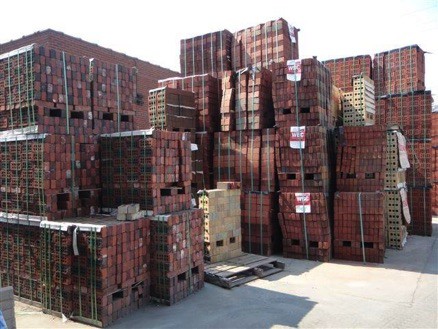
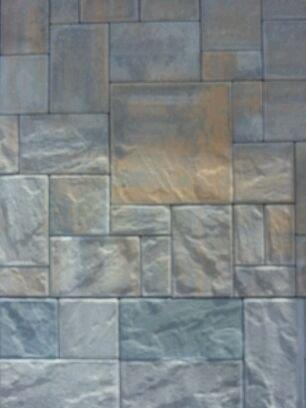
At our facility at 747 Meacham Avenue in Elmont, we stock cement, sand, aggregates, precast concrete, concrete blocks, and mason’s hardware alongside our full line of Cambridge Pavingstones. For projects that combine concrete work with paving — which describes the majority of Nassau County outdoor renovations — sourcing both from one location saves time and eliminates the coordination headache of running between suppliers.
Ready Mix Concrete Delivery: What Nassau County Job Sites Actually Require
Delivery logistics are where a lot of concrete projects run into trouble — not because of the concrete itself, but because of what happens between the batch plant and the pour site. Nassau County’s suburban neighborhoods present real access challenges that don’t exist in open commercial settings, and they’re worth thinking through before you schedule your delivery.
Mixer trucks are large. They have significant turning radius requirements and need a clear, unobstructed path to get within chute range of your pour site. In communities like Elmont, Valley Stream, and Floral Park, that means assessing your street width, accounting for parked cars, checking for low-hanging tree branches or overhead utility lines, and making sure the truck can actually reach your driveway without tearing up a lawn or getting stuck.
The other timing factor that doesn’t get enough attention: ready mix concrete must be discharged within 90 minutes of water being added to the mix. That’s the ASTM C94 standard, and it exists for good reason — concrete that sits too long in the drum loses workability and strength. Supplier proximity to your job site isn’t just a convenience. It directly affects the quality of what gets poured.
How to Order Ready Mix Concrete in Nassau County Without the Common Mistakes
The ordering process is straightforward once you know what information to have ready. Before you call, you need your project dimensions — length, width, and depth — so we can calculate cubic yards. From there, our team will help you confirm the right PSI, verify whether you need air entrainment or specific admixtures, and flag anything about your project that might affect the mix or delivery.
One rule that applies to every concrete order: add 5 to 10 percent to your calculated quantity before you finalize the number. Uneven subgrades, slight form variations, and normal spillage during placement all consume more material than the math suggests. Running short mid-pour creates a cold joint — the point where fresh concrete meets partially set concrete — and that joint is a structural weakness that’s expensive to address after the fact. Ordering a little extra is cheap insurance.
Lead time matters more than most people expect, especially during Nassau County’s busy season. Spring and summer delivery slots fill quickly, and same-day orders are rarely available from reputable suppliers. Standard practice is to schedule at least 24 hours in advance, then confirm again about two hours before the pour. That confirmation call gives you a chance to flag any last-minute site changes and ensures the driver knows exactly where to go and what to expect when they arrive.
Site preparation is your responsibility, not the driver’s. Forms need to be set and braced before the truck arrives. Rebar should be placed per your engineer’s specifications. The crew needs to be on-site and ready to work the moment the pour begins — concrete doesn’t wait. A truck that sits while a crew gets organized is burning through that 90-minute window fast.
We’re open Monday through Friday from 7AM to 5PM and Saturday from 7AM to 2PM. Call us at 516-825-0093 and ask for Pete or Steve — between the two of them, there’s over 50 years of counter experience, and they’ve seen virtually every project scenario Nassau County can throw at a concrete order.
What Affects Ready Mix Concrete Pricing in Nassau County
Concrete pricing isn’t a single number — it varies based on mix design, quantity, delivery distance, and the time of year you’re ordering. Understanding what drives the cost helps you budget accurately and avoid the mistake of comparing quotes that aren’t actually for the same product.
Mix design is the first variable. Higher PSI mixes cost more than standard mixes because they require more cement per cubic yard. Specialty admixtures — accelerators, retarders, water reducers — add to the cost as well, though the amounts are typically modest relative to the total project budget. Air entrainment, which we’ve already established is non-negotiable for Nassau County exterior work, is a standard addition that we build into our exterior mix pricing.
Quantity affects unit cost in the expected direction — larger orders generally come with a lower cost per cubic yard. Short loads, meaning orders significantly below a full truck’s capacity, often carry a short load surcharge. If your project requires less than a full truck, ask about that upfront so the number doesn’t surprise you on the invoice.
Delivery distance is a real factor, which is one reason our location in Elmont matters beyond just the 90-minute discharge window. We have a structural cost advantage for Nassau County projects compared to suppliers based further out, all else being equal.
Seasonal pricing is worth planning around. The 2024–2025 period has seen upward pressure on concrete costs driven by tariffs on imported cement clinker and diesel price volatility, both of which flow through to the end buyer. Spring and summer demand peaks also affect availability and pricing. If your project timeline is flexible, early-season ordering can sometimes lock in more stable pricing before peak demand hits.
We’ve been serving Nassau County contractors and homeowners since 1956, and we don’t complicate the pricing conversation. When you call, you get a straight answer about what your project requires and what it costs — no pressure, no upsell, no runaround.
Where to Source Ready Mix Concrete Materials in Nassau County, NY
The difference between a concrete project that holds up and one that doesn’t comes down to decisions made before the pour — the right mix for the application, the right quantity, the right preparation. Nassau County’s climate makes those decisions more consequential than they’d be in a milder market. Freeze-thaw cycles, road salt exposure, and dense suburban job sites all raise the stakes on getting the specifications right.
We’ve been at 747 Meacham Avenue in Elmont since 1956, serving contractors and homeowners across Nassau County and Queens. Our 20,000-square-foot facility stocks the concrete materials, masonry supplies, and Cambridge Pavingstones that local projects depend on — and our staff has the experience to help you source the right materials without overcomplicating it.
If you’re planning a concrete project and want to talk through what you need, reach out to us. No pressure, no guesswork — just straightforward answers from people who know this market.